Egyptian · History
The History of Senet
- Period
- c. 3100 BC
- Origin
- Ancient Egypt
- Players
- 2
- Play time
- 15-30 min
- Difficulty
- Medium
Few objects connect us to the daily life of ancient Egypt as intimately as a game board. Senet, whose name is often translated as the “game of passing,” is among the oldest known board games on Earth, played along the Nile from at least the First Dynasty, around 3100 BC, through the Roman period some three thousand years later.
A board of thirty squares
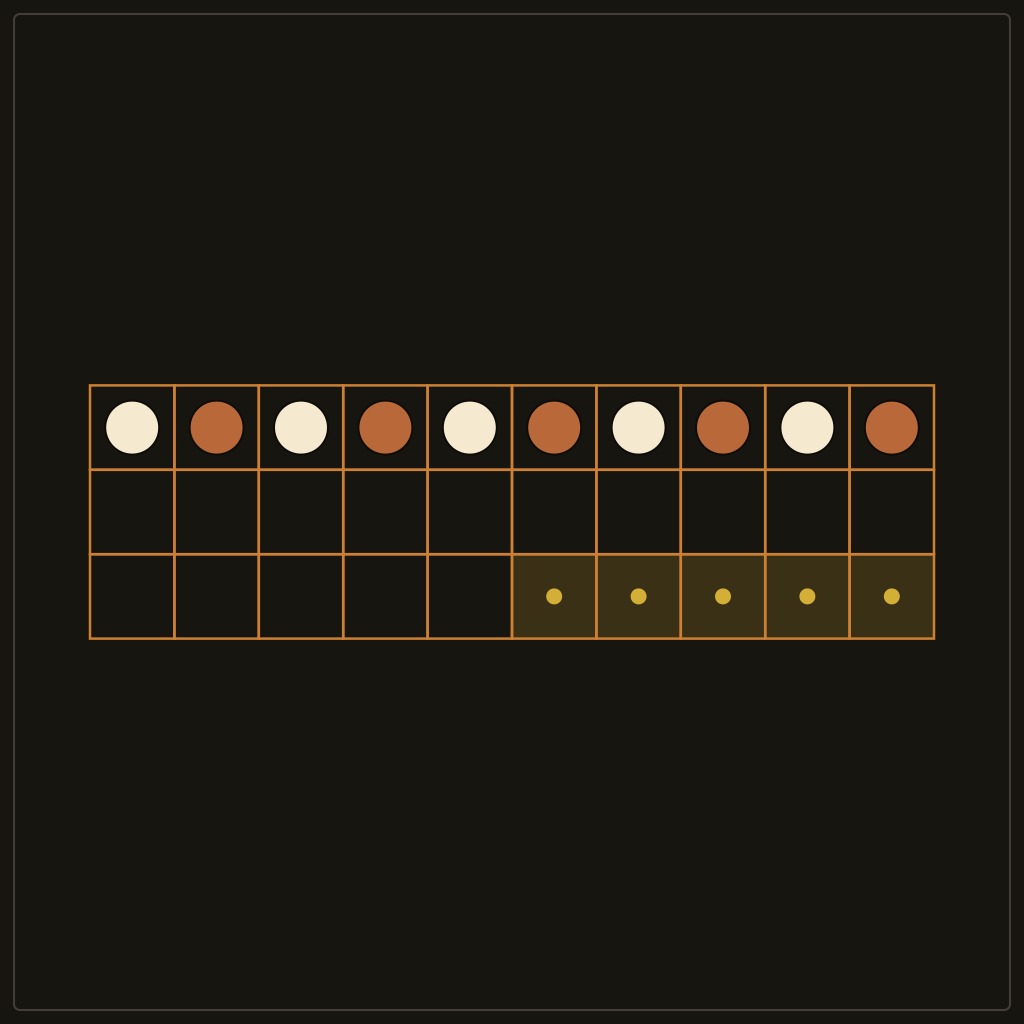
Senet was played on a rectangular board of thirty squares arranged in three rows of ten, a 3×10 grid that remained consistent across millennia. Two players each commanded a set of pawns, commonly five per side, though painted depictions such as that of the official Hesy-Ra show seven. There were no dice. Instead, movement was decided by casting throwsticks (flat sticks marked on one face) or, in some versions, knucklebones, with the number of marked faces landing upward determining how far a piece advanced.
The earliest surviving traces come from predynastic and Early Dynastic burials, including a possible board fragment from a tomb at Abu Rawash. By the New Kingdom the game was everywhere: scratched into temple roofing slabs as informal play, and crafted into fine gaming boxes for the elite. The tomb of Tutankhamun yielded several Senet sets, the finest a gilded ebony box mounted on a stand with feet carved as the paws of a lion.
From pastime to passage of the soul
What began as a simple diversion acquired, over time, a religious meaning. By the New Kingdom, roughly 1550 BC onward, the board itself was understood as a map of the journey through the afterlife, the passage of the deceased through the perilous Duat, the Egyptian underworld. The thirty squares became stations on that road, several bearing names and protective symbols tied to gods and to the soul’s rebirth.
This symbolism is enshrined in the Book of the Dead, where Spell 17 depicts the deceased seated at a Senet board, playing and winning against an unseen opponent. To prevail was to demonstrate worthiness, to outplay fate and pass safely into eternity. The game was no longer merely about reaching the final square. It was a rehearsal for the most important contest a person would ever face.
A window into the Egyptian mind
Because Senet endured for so long and across every level of society, from laborers scratching grids in stone to pharaohs buried with jeweled sets, it offers historians a rare, continuous thread through Egyptian culture. It reveals a people who saw no firm border between play and prayer, between an evening’s amusement and the architecture of the cosmos. To move a pawn across those thirty squares was, in the Egyptian imagination, to walk the same road the soul would one day travel toward the light.