February 16, 2026
What Did Roman Soldiers Play?
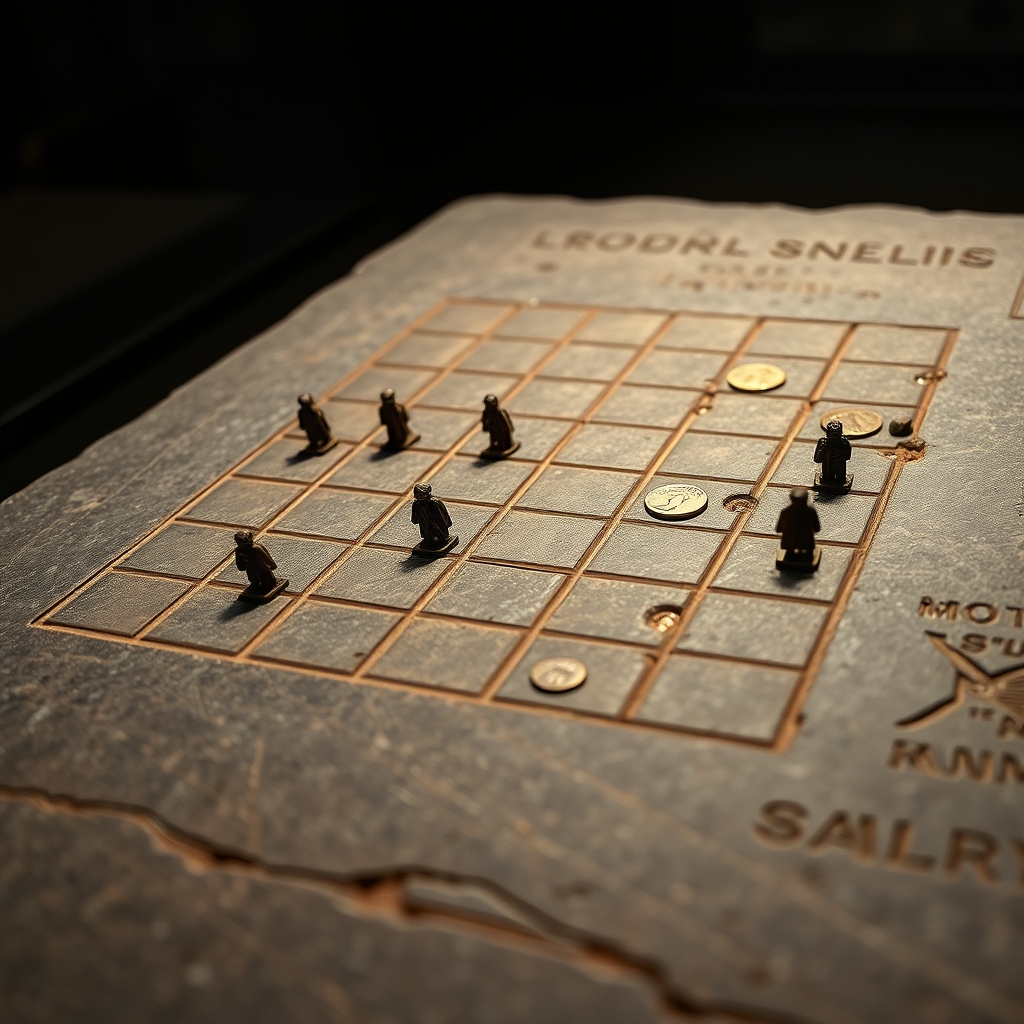
A Roman legionary’s life was not all marching and battle. Campaigns meant long stretches of waiting: garrison duty at the edge of empire, the slow grind of a siege, the empty hours between orders. To fill that time, soldiers reached for the same thing humans always have, a game. Across the Roman world, from the forts of Britain to the deserts of Syria, archaeologists keep turning up the boards, dice, and counters that the legions used to pass their downtime.
The game of little soldiers
The most prestigious game in the Roman repertoire was Ludus Latrunculorum, the “game of little soldiers” or “game of mercenaries.” It was a game of pure strategy, played on a gridded board with no dice and no element of chance. Everything depended on tactical skill, which is why it appealed to a military culture that prized cunning and discipline.
The game traced its lineage to the Greek game of petteia, which Plato had praised as a model of strategic thinking. The Romans refined it into a contest of capture. Pieces, of which there might be sixteen or thirty per side, advanced across the squares, and a piece was taken when it was flanked, caught between two enemies. Roman writers including Varro, Martial, and Ovid mention the game, and its appeal cut across class: a sharp game of latrunculi was a test of the same mental qualities a good officer needed in the field.
The board had no fixed size. A larger grid made for a longer, more demanding game, and soldiers improvised constantly, scratching grids into paving stones, tabletops, and the steps of public buildings. Such graffiti boards survive throughout the former empire, mute evidence of countless games played in idle moments.
Dice, luck, and the roll of Tabula
Not every soldier wanted a pure battle of wits. For those who enjoyed a wager and the thrill of chance, there was Tabula, a race game and direct ancestor of backgammon. Players moved their counters around a track according to the throw of three dice, combining luck with judgment. Its older relative, Ludus Duodecim Scriptorum, the “game of twelve lines,” was played by everyone from children to emperors.
Dicing was wildly popular and frequently illegal, formally restricted to certain festivals, though the law was honored mostly in the breach. Soldiers gambled on dice constantly, and the small bone and clay dice they used are among the most common gaming finds at military sites. For comparison, you might enjoy how other cultures balanced skill and luck in our look at the Royal Game of Ur.
Games on the march
What made these games right for the legions was their portability. A strategy game needed only a grid and counters, which could be improvised anywhere; a dice game needed only the dice and a scratched track. Soldiers carried gaming gear on cloth and lightweight boards that rolled up easily for the march, ready to be unpacked whenever the column halted and the waiting began.
There is something deeply human in this picture: hardened soldiers of the most formidable army of the ancient world, hunched over a scratched grid, arguing over a capture or cheering a lucky roll. The games gave shape to the long hours and kept the mind sharp between campaigns.
If you would like to test your tactics as a legionary once did, our replica of Ludus Latrunculorum brings the soldiers’ game back to the table, no dice required, just wits.