August 10, 2026
The World's Oldest Dice and How They Were Used
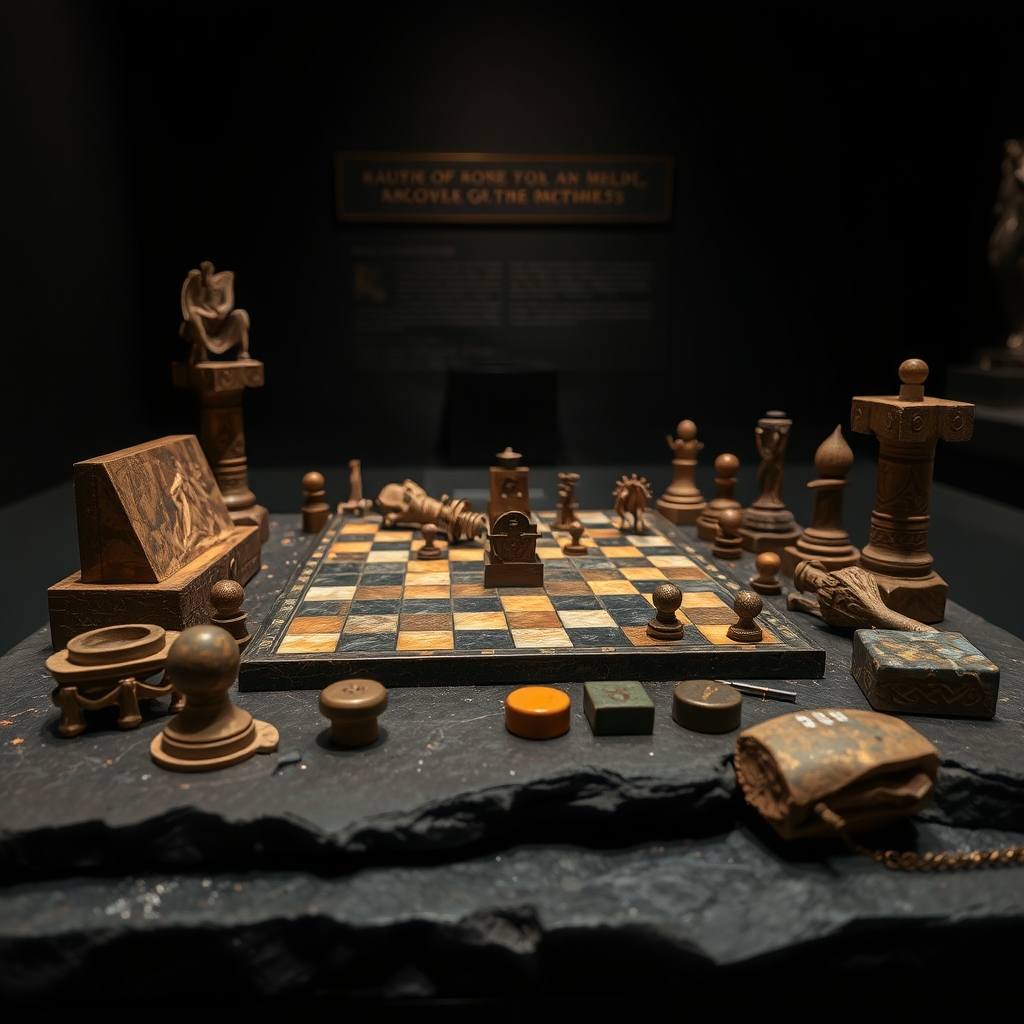
Long before anyone carved a cube with pips, humanity was already gambling on the fall of a bone. The desire to surrender a decision to chance, to let fate rather than judgment choose, is one of the oldest impulses we can trace in the archaeological record. The objects that satisfied it have changed shape over five thousand years, but the urge behind them has not changed at all.
Before the cube: the astragalus
The first dice were not made. They were found. The astragalus, the small knuckle or ankle bone of a sheep, goat, deer, or horse, has four distinct sides on which it can come to rest, each with a different probability. That made it a natural four-sided die. Archaeologists find these bones in excavations from as early as 5000 BCE in numbers far exceeding other bones from the same animals, a strong hint that people were collecting and using them deliberately.
By the fifth century BCE, astragali were in use as gaming and gambling tools across the ancient world, from the Greeks and Egyptians to Indigenous peoples of the Americas. The Greeks even assigned values and names to the different throws. A handful of knucklebones was a pocket casino, carried for centuries by soldiers, shepherds, and children alike.
The first true dice
The earliest cubic dice we know come from the Burnt City, an archaeological site in southeastern Iran, dated to roughly 2800 to 2500 BCE. They were found alongside a backgammon-like board, meaning that almost as soon as people made dice, they were using them to drive board games. From Mesopotamia the cube spread, and the Royal Game of Ur was played with tetrahedral dice marked on their corners.
The Egyptians, by contrast, often preferred throwing sticks, flat lengths of wood with one painted side, which is how Senet was most likely played. The principle was the same: a randomizer to advance your pieces, the will of the gods made visible on the table.
When chance was rigged
Where there is gambling, there is cheating, and the dice prove it. Loaded dice, weighted to favor certain numbers, have been excavated from Pompeii and from Roman military camps across the empire. Many surviving astragali show deliberate modification too, filed flat on one face, drilled, or weighted with lead to change the odds. The impulse to cheat at dice, it turns out, is very nearly as old as dice themselves.
These objects tell a deeply human story. A Roman legionary at a frontier fort throwing bones for wages, a Mesopotamian noble casting marked pyramids across a board of inlaid shell, a Greek child gathering knucklebones in the dust, all of them trusting their small fortunes to a tumbling piece of bone or wood.
The games these dice served are still playable today. Explore our reproductions of the boards they were thrown across in the full collection, and feel the same suspense that has hung over the falling die for five thousand years.