March 30, 2026
The Tafl Family: Understanding Viking Board Games
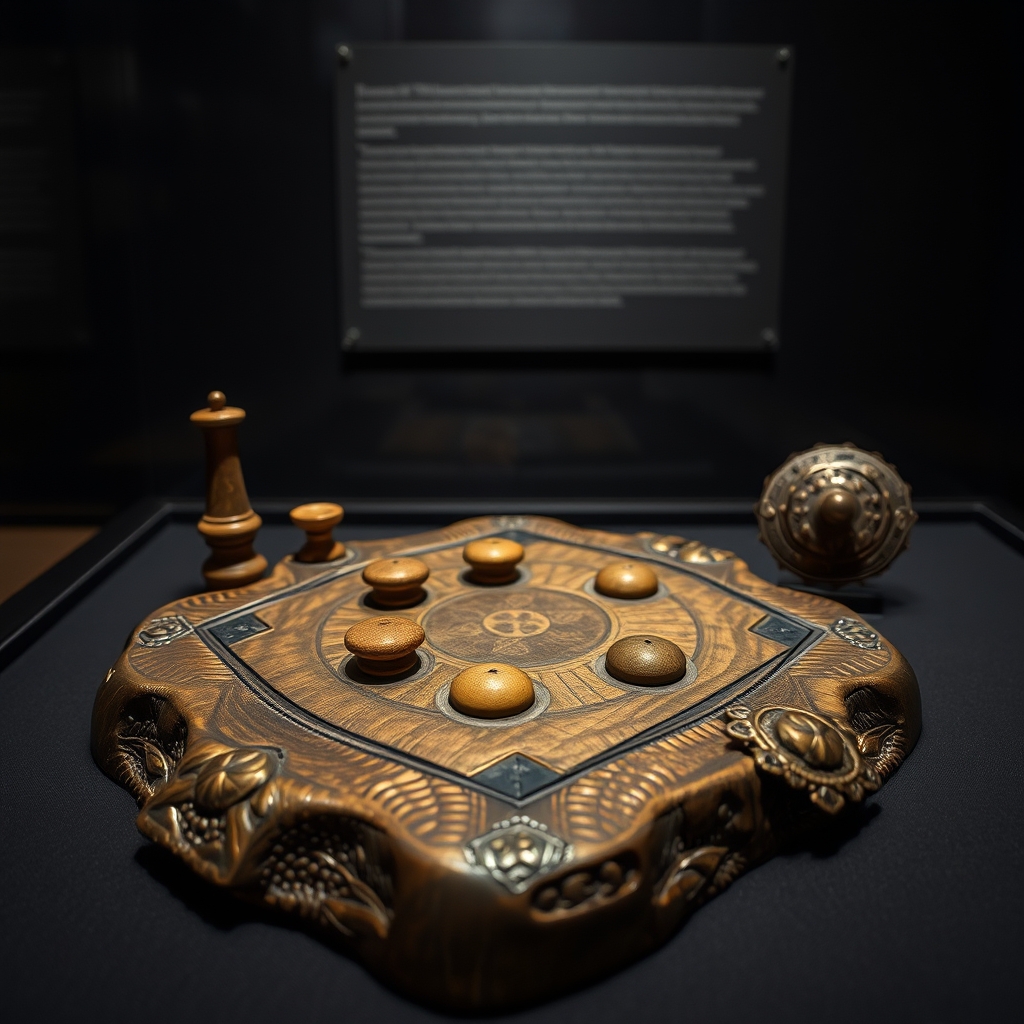
Mention “Viking chess” and most people picture a single game. In truth, the Norse and their neighbors played a whole family of related contests known collectively as tafl, Old Norse for “table” or “board.” The same core idea appears again and again across Northern Europe, scaled up and down, renamed from one kingdom to the next. Understanding how these games relate to one another is the way into one of the most distinctive traditions in all of board gaming.
One idea, adapted many ways
What unites the tafl games is their unusual asymmetry. In nearly every traditional game, the two sides are mirror images with identical aims. The tafl games break that rule entirely. One player commands a king and a small band of defenders, positioned in the center of the board. The other player fields roughly twice as many attackers, arrayed around the edges. The defender’s goal is escape, and the attacker’s goal is capture. Pieces are usually taken by being flanked, caught between two enemies on either side.
This single premise, a hunted king and his hunters, was played across much of Northern Europe from well before the Viking Age until chess gradually displaced it around the 12th century. It traveled with the Norse and took root wherever they settled, adapting to local tastes along the way. The best-known version, Hnefatafl, takes its name from the hnefi, the king piece at the center of the board.
A board for every kingdom
The strength of the tafl family is how readily it scaled. Shrink the grid or enlarge it, adjust the count of defenders and attackers, and you have a new game that still feels familiar.
- Tablut comes from the Sámi people of Lapland, where a king and eight defenders attempt to break free of a besieging force. Our knowledge of its rules owes much to the 18th-century naturalist Linnaeus, who recorded a game he observed during his travels.
- Brandub (“black raven”) is the Irish member of the family, played on a seven-by-seven board: a king and four defenders against eight attackers, with the king racing for a corner square.
- Ard Rí (“High King”) is the Scottish variant, likewise played on a seven-by-seven grid.
- Tawlbwrdd carried the tradition into Wales, and Alea Evangelii represents a large, elaborate version recorded in a medieval English manuscript.
Across all of them, the family resemblance is clear. Learn one, and you can sit down to any of the others.
Why the asymmetry matters
The unequal sides are not a flaw to be balanced away. They are the whole point. Playing the defender, with fewer pieces but a clear escape to aim for, feels nothing like playing the attacker, who must coordinate a larger force to close every avenue of flight. Skilled players test themselves on both sides, and the best matches alternate roles so each player faces the same challenge from opposite ends.
This is also why the games reward study rather than luck. There are no dice in tafl. Victory comes from reading the board, anticipating your opponent’s plan, and committing at the right moment, the same qualities the Norse would have prized in a real captain.
To set up a Hnefatafl board is to enter a tradition that thrived for centuries before chess arrived from the south. Choose your side, king or hunter, and discover why these asymmetric duels held the attention of the Viking world for so long.