April 6, 2026
Patolli: The Aztec Game the Spanish Tried to Erase
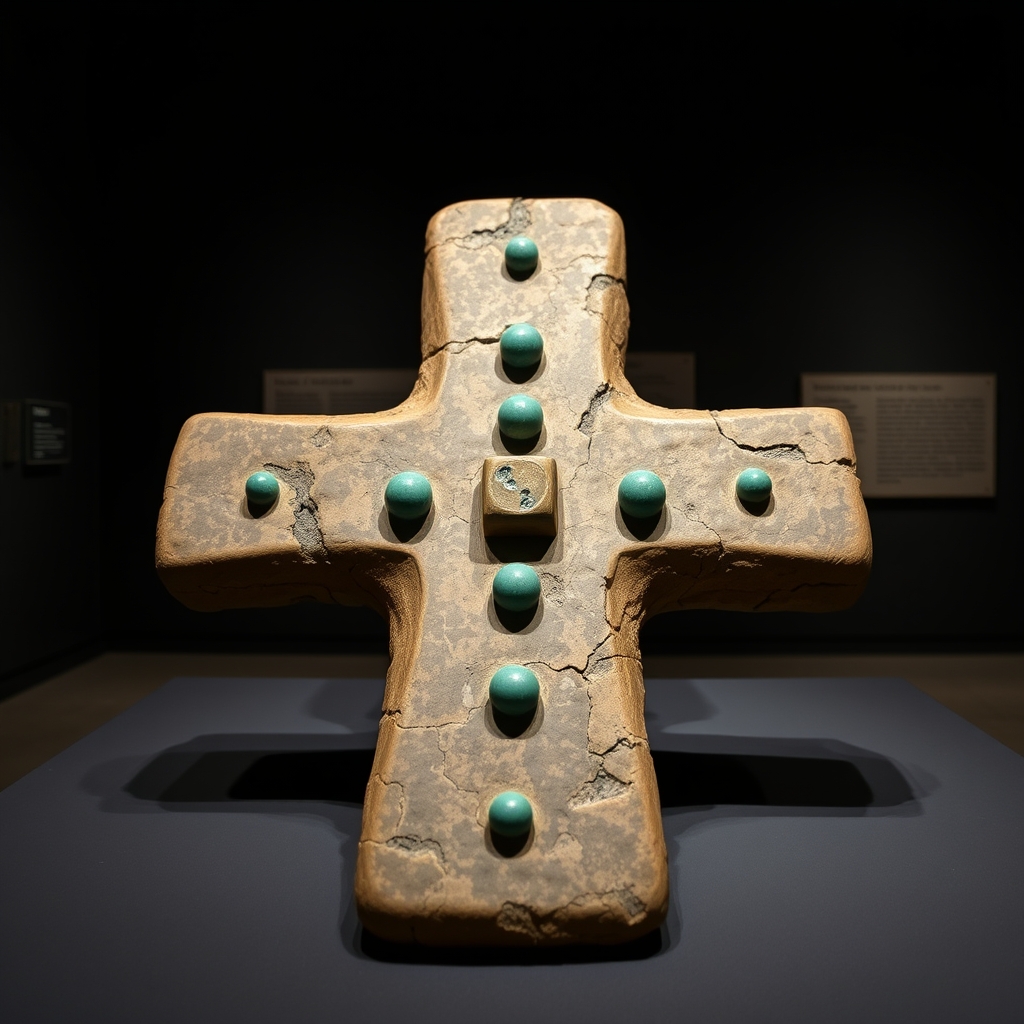
Few ancient games were played with such intensity, or suppressed so deliberately, as Patolli. Across Mesoamerica, from the great city of Teotihuacan to the markets of Aztec Tenochtitlan, players knelt over a cross-shaped mat, cast painted beans, and wagered everything from cacao to cloth on the fall of chance. It was thrilling, sacred, and dangerous enough that the Spanish set out to stamp it from memory.
A game of the gods
Patolli was never merely a pastime. The Aztecs placed it under the patronage of Macuilxochitl, “Five Flower,” the god of games, gambling, music, and feasting. Players are said to have invoked him before a match, and the game’s element of chance carried a spiritual weight, a way of reading fortune as much as testing wits.
The board itself was a great X, its arms divided into a track of squares, often drawn directly onto a mat with liquid rubber. Movement came not from dice but from five black beans drilled with a white dot. The number of marked faces landing up determined how far a piece advanced. Six pebbles or stones per player raced around the cross, and the stakes rode on every throw.
Why the Spanish feared it
When the Spanish arrived in the sixteenth century, chroniclers like Diego Durán and Bernardino de Sahagún described Patolli in vivid detail, and with alarm. The gambling could be ruinous, the religious associations were unmistakably tied to the old gods, and the game’s hold on the population was strong. Spanish authorities responded by burning the mats and beans wherever they found them, treating the game as both a vice and a vessel of forbidden belief.
That campaign was largely successful. Unlike Senet or the Royal Game of Ur, whose physical boards survived in tombs, Patolli left fewer durable traces, and much of what we know is reconstructed from those same Spanish accounts that sought to erase it, a bitter irony of the historical record.
Playing it today
Modern reconstructions restore Patolli to the table as a fast, social race game for two to four players, full of swing and reversal. It rewards a willingness to gamble and punishes the cautious, exactly the qualities that made it the talk of Mesoamerican markets and palaces alike.
To play it now is to push back, gently, against five centuries of forgetting. Explore our Patolli set and bring one of the Americas’ great lost games back into the light.