May 18, 2026
Before Dice: Throwsticks, Knucklebones, and Casting Lots
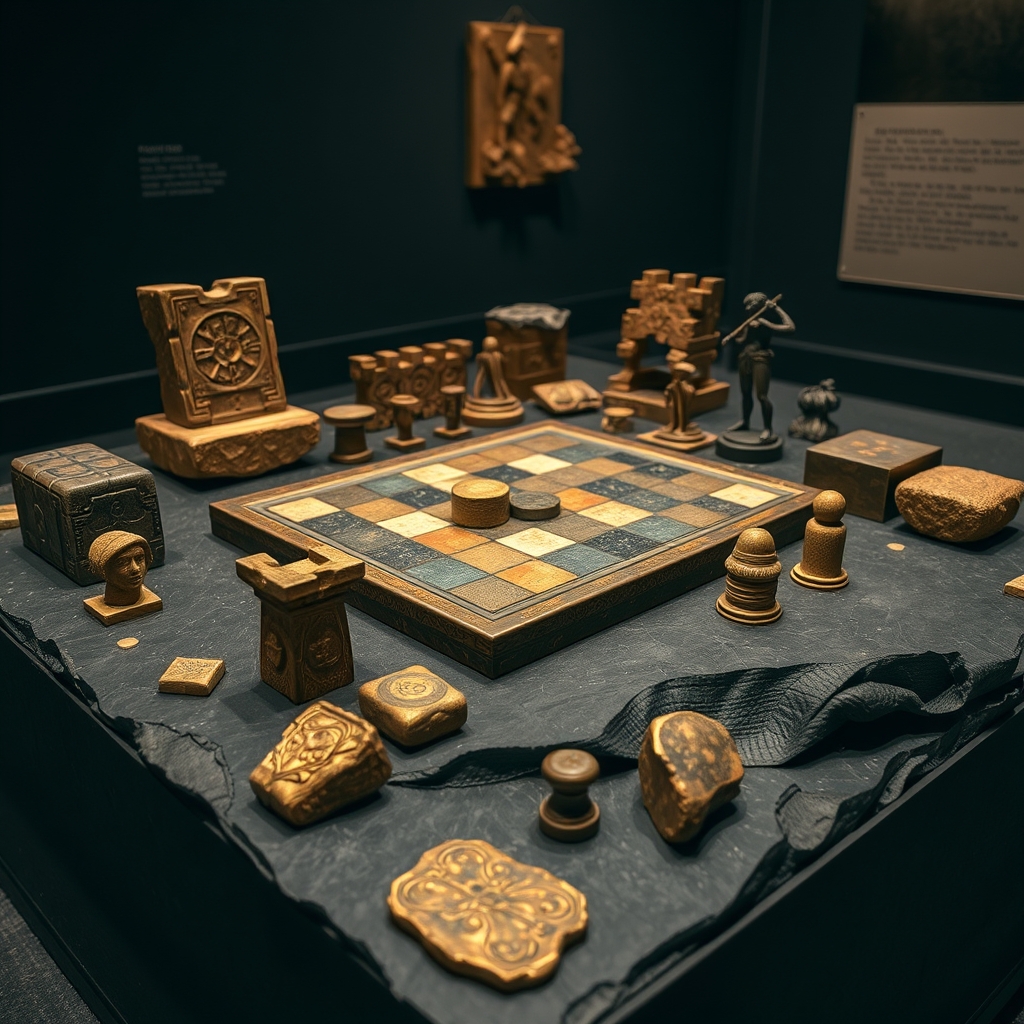
The six-sided cube with its tidy pips feels eternal, as if chance had always worn that exact shape. It did not. For most of human history, people who wanted to leave a decision to fate reached for something far older and far stranger: the ankle bones of sheep and goats, flat sticks painted on one face, and pebbles cast onto the ground to be read like an oracle. The cube is a latecomer. These were the first randomizers.
The bone that started it
Long before manufactured dice, there was the astragalus, the small four-sided ankle bone of a hooved animal. Because it has four distinct, unequal faces and lands on each with different odds, it makes a natural, if lopsided, randomizer. Archaeologists find astragali in human contexts reaching back thousands of years, in numbers that dwarf other animal bones, a sign that they were collected and kept rather than merely discarded. The Greeks called them astragaloi and the Romans called them tali, and a popular Roman game involved throwing four of them at once and scoring the combination.
These bones lived a double life. They were used for play and gambling, but also for divination, the practice known as astragalomancy, in which the pattern of a throw was read as the will of the gods. The line between gaming and fortune-telling was thin. At Maresha in the Judean foothills, excavators recovered hundreds of astragali, some inscribed with the names of deities, used by Hellenistic-era people for exactly this blend of luck and prophecy.
Sticks, pyramids, and the roll of the gods
Egypt took a different path. The ancient race game of Senet, played from before 3000 BCE, was moved not by a cube but by flat throwsticks, two-sided rods that, when tossed, showed either their plain or their marked face. The number of marked faces landing upward determined how far a player could move, making the throwsticks a true ancestor of the die. Other Egyptian and Mesopotamian games used four-sided pyramidal dice, and the Royal Game of Ur was driven by just such tetrahedral pieces.
Even the language of chance carried weight beyond the gaming board. The Roman historian Tacitus described Germanic tribes deciding important matters by the casting of lots, and the same instinct runs through cultures the world over: when human judgment failed or feared to choose, the throw was trusted to reveal something truer than opinion. To roll was, in a sense, to ask.
The long road to the cube
The familiar cubical die did eventually arrive and spread, prized for giving each of its six faces an equal chance, a fairness the lopsided astragalus could never offer. But it inherited a deep and ancient role. Every time we shake dice in a cupped hand, we repeat a gesture older than writing, surrendering a moment of control to forces outside ourselves.
That gesture animates the oldest games still. The serpent race of Mehen likely turned on a casting process of small marbles, and the great race games of antiquity all asked their players to court luck before exercising skill.
If you would like to feel how the ancients courted chance, take up one of our reconstructed games and let the old randomizers decide your fate.